
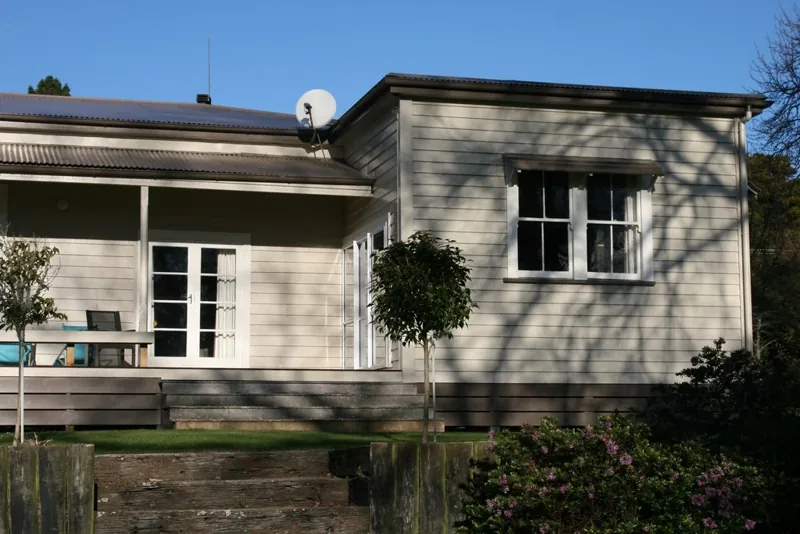
Part of our exterior house painting guide.
Weatherboard painting preparation: inspect first
Walk each elevation from safe ground level. Photograph peeling edges, bare timber, open joints, stained areas and boards that look soft or distorted. Check whether water from gutters, flashings or nearby planting is keeping part of the wall damp.
Different sides can need different amounts of work. Sun-exposed paint may be faded or brittle while a shaded face stays wet longer. Include the high gables and areas behind downpipes in the scope, even if they are not easy to see from the street.
Before disturbing old paint, establish whether it needs lead-safe management. WorkSafe advises presuming lead-based paint on buildings from the 1980s or earlier. Arrange assessment and a suitable work method rather than starting uncontrolled sanding or scraping.
How to paint weatherboards: the sequence
- Resolve defects. Repair the source of water entry and assess damaged timber. Filler and paint cannot restore a rotten board.
- Clean appropriately. Remove dirt and contamination with a method suited to the cladding. Avoid forcing water behind boards.
- Let the timber dry. A surface can look dry while retaining moisture. Confirm it is suitable for the coating system.
- Prepare the old coating. Remove unsound material safely and smooth the transition to sound edges.
- Prime and repair as specified. Bare timber, existing coating and filled areas may need different treatment.
- Apply the topcoat system. Follow coverage, coat count and recoat instructions in suitable weather.
This is the planning sequence. The exact products and preparation depend on the timber, previous paint and manufacturer requirements.
When the surface and access are ready, protect adjacent windows, paving and planting. Work from the higher boards down, completing manageable lengths with the grain. Brush the underside and profile carefully without filling intended drainage gaps, then distribute paint evenly across the face. Keep a wet edge and avoid thick deposits around overlaps. Inspect the dried coat for misses before recoating at the stated interval.
The work needed to remove failing paint, repair boards and provide access affects the quote. Include photos of every elevation and specify whether fascias, soffits and joinery are included, so you compare the same scope.
Check what ‘pre-primed’ means
New boards may arrive with a transport or holding primer that needs further preparation. Record the cladding supplier, primer type and how long the boards have been exposed. Confirm compatibility rather than assuming the factory coating can be painted over unchanged.
For previously painted boards, good adhesion of the old layers matters. A new topcoat cannot strengthen a weak layer underneath. Discuss whether patch preparation is sufficient or whether more extensive removal is needed, based on the actual surface.
Our primer and undercoat guide explains why those layers have different purposes.
Colour, heat and movement
Darker colours absorb more solar heat. On timber, that can increase movement and place greater demands on the coating and joints. Check the cladding manufacturer's colour or light-reflectance requirements before choosing a dark shade, particularly on a new build.
Look at colour samples beside the roof, windows, brickwork and fixed landscape elements. An exterior colour is seen over a much larger area than a small card. Keep the colour decision and coating system together in the quote brief.
For application conditions, read the exterior painting timing guide. A hot board in direct sun may be unsuitable even when the air temperature seems comfortable.
Plan access and protect the property
Preparation and painting need safe access to all included surfaces. Tell us about slopes, narrow side paths, conservatories, attached roofs and overhead services. Discuss access equipment before work is scheduled.
Identify plants, vehicles, paths and neighbouring areas that need protection. Keep pets and children clear of the work zone. Confirm whether windows, fascias, soffits and doors are part of the weatherboard quote or separate items.
Use our exterior house painting guide to assemble the whole scope. After repainting, inspect and maintain the finish so small problems are noticed before they spread.
Your questions
Can weatherboards be painted without stripping all the old paint?
Sometimes sound, well-adhered paint can remain after suitable preparation. Loose or failing layers need assessment and removal using an appropriate safe method.
Can I paint damp weatherboards?
The timber must meet the coating system's moisture requirements. Resolve the moisture source and allow drying before painting.
Will paint fix rotten boards?
No. Damaged or decayed timber needs repair or replacement before coating.
Plan a sound weatherboard repaint
Send whole-elevation photos and close-ups of problem boards. We can discuss the preparation and access your home needs.
Request a quote