
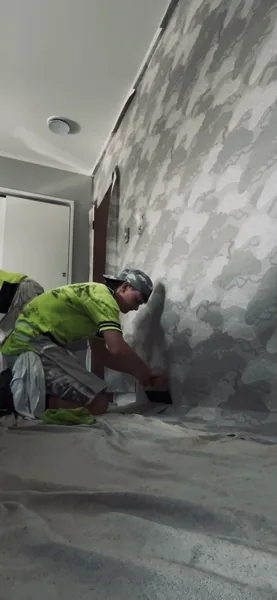
Part of our interior painting guide.
New house painting: a room-by-room finish schedule
A new home contains several painting jobs inside one programme. Ceilings, walls, internal doors, trim and exterior cladding may use different products and sheens. Write down each surface, its colour and the intended finish so the quote and the finished result refer to the same brief.
Include garages, cupboards, wardrobes and service areas explicitly. Decide which surfaces stay unpainted and which are finished by another supplier. Factory-finished joinery and pre-primed cladding need their own checks; a transport primer is not automatically a complete paint system.
Our new-house painting service sits alongside residential repaints, commercial work and specialist finishes. Tell us the construction stage and planned handover date when you first enquire.
New build painting: agree the sequence
- Confirm the substrate. Record the wall linings, timber, cladding and any manufacturer coating requirements.
- Finish wet and dusty work. Plaster and other materials need suitable drying conditions before coating. Coordinate sanding and cutting so fresh finishes are protected.
- Check the prepared surfaces. Look for joints, ridges, dents and uneven texture in the light the room will receive.
- Apply the specified system. Sealer, primer, undercoat and topcoat perform different jobs. Each stage needs its product-specific drying interval.
- Coordinate following trades. Flooring, electrical fit-off, hardware and cabinetry can affect access and create touch-up needs.
- Review the finish. Agree how defects, marks and final touch-ups will be recorded before handover.
The exact order depends on the building and other trades. Use this sequence to start the conversation, then agree responsibilities with your builder and painter.
Surface preparation is still needed in a new home
New does not mean ready for paint. Plasterboard can hold sanding dust; timber can have handling marks; exposed primers can deteriorate while construction continues. Coating over those problems can leave visible defects or weak adhesion.
Ask which preparation is included: dust removal, minor filling, sanding between stages, sealing new linings and treatment of bare timber. Major lining defects or damaged cladding may need correction by the relevant trade before painting proceeds.
Our guide to primer versus undercoat explains the purpose of the layers. For the broader interior sequence, start with our house painting guide.
Choose finishes in the actual light
Large windows and light falling along a wall can make surface texture more noticeable. Higher sheen reflects more of that light. Consider the room's use, cleaning needs and appearance together when choosing a coating.
Use physical samples next to flooring, cabinetry and benchtops. Record separate decisions for ceilings, walls and trim; the same colour can appear different when the sheen or background changes. Keep the approved finish schedule available to everyone making selections.
For doors, discuss whether off-site spray painting fits the build sequence. Confirm delivery, storage and fitting arrangements, and protect new coatings while they cure.
Compare the scope, not only the price
A new-build quote needs enough detail to compare like for like. Check the areas included, preparation allowance, products and coat system, access equipment, protection, timing and what happens when another trade marks a finished surface. Ask whether exterior work and separate structures are included.
Supply drawings and a finish schedule where available, but also describe any site constraints. A change in colour, substrate or access after pricing can alter the work. Agree how changes will be documented before the programme moves ahead.
We can discuss your project and quote for the agreed work. The right price depends on the building, surfaces, preparation and finish requirements.
A practical handover checklist
- Check each room against the agreed colour and finish schedule.
- Review visible surfaces under normal lighting and agree any touch-ups.
- Confirm doors and windows operate without fresh paint sticking.
- Record products, colours and sheens for maintenance.
- Ask when cleaning, adhesive hooks and regular use are suitable for the coating.
- Keep any agreed touch-up paint labelled and stored as directed.
See how long paint takes to dry before planning move-in tasks. Touch-dry is not the same as fully cured.
Your questions
Do you paint new houses?
Yes. We have specialised new-house teams. Contact us with the build location, plans, surfaces and programme so we can discuss the scope.
Should colours be chosen before painting starts?
Yes. Confirm colour and sheen for each surface in a written finish schedule, with samples checked against the home's fixed finishes.
Does new plasterboard need sealing?
New plasterboard needs a suitable coating system for its surface and finish level. Confirm the specified sealer and preparation before topcoating.
Bring us into your build planning
Send your plans, finish schedule and expected painting stage. We can discuss the scope and coordination your new home needs.
Request a quote