
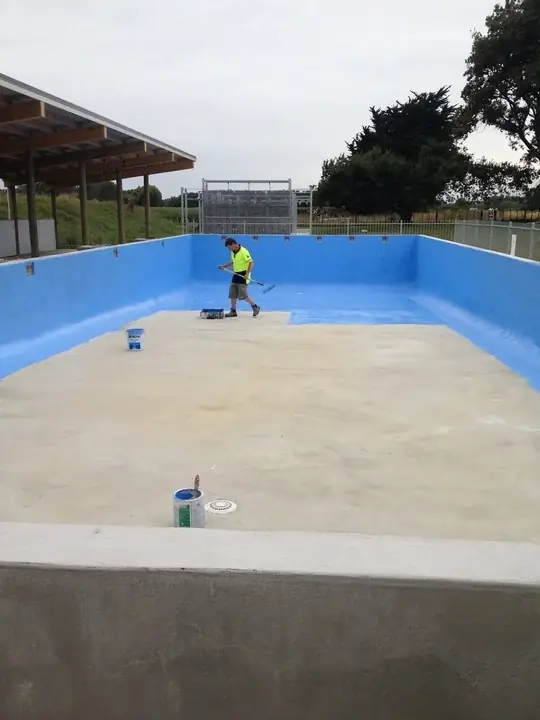
Part of our exterior house painting guide.
Check the concrete before you paint
- Is it cured? New concrete needs time to cure and dry before coating. Follow the coating maker's guidance.
- Is it damp? Tape a square of plastic to the wall for a day. Condensation underneath shows moisture coming through.
- Efflorescence? White, powdery salt deposits mean water is moving through the wall. Brush them off and deal with the water source.
- Existing coating? Test whether old paint is sound. Loose or chalky paint must come off.
How to paint a concrete wall
- Clean off dirt, mould and grease. Hard masonry can usually be water blasted.
- Repair cracks and holes with a filler made for masonry.
- Let it dry thoroughly.
- Apply a masonry sealer or primer to bind the surface and even out absorption.
- Apply two coats of masonry paint with a thick-nap roller, working it into the texture. Brush the edges.
Block walls are very porous, so expect the first coat to use more paint.
Interior vs exterior concrete
Outside, use an exterior masonry acrylic that lets moisture vapour escape. Inside, concrete walls in basements and garages often need moisture resistance; damp internal walls should be investigated before painting. Concrete floors need a floor coating, not wall paint.
Drying times
Masonry paint is usually touch dry quickly but needs longer before recoating, and longer again in cool or humid weather. Follow the label. Our paint drying times guide explains touch dry, recoat and cure.
Concrete, block and brick homes
Painting a whole masonry home is a bigger decision, because paint on brick or block is hard to reverse. See painting a brick house, and our industrial coatings page for hard-wearing concrete surfaces.
Painting block walls and retaining walls
Concrete block is porous and textured, so it takes more paint and a thick roller. Retaining walls often have water behind them; without drainage and a barrier on the back face, moisture comes through and lifts paint. Fix drainage before painting the visible face.
Decorative alternatives
If you want the look of concrete without a solid colour, a clear sealer or a stain made for masonry keeps the texture visible. Ask us which suits your wall.
Your questions
Do you need to seal concrete before painting?
Yes, usually. A masonry sealer binds the surface and helps the paint grip and cover evenly.
Can you paint damp concrete?
No. Find and fix the source of moisture and let the wall dry before painting.
What roller is best for concrete walls?
A thick-nap roller reaches into the texture of block and rough concrete.
Painting concrete or block walls?
Send photos and tell us whether the walls are inside or out. We will check the surface and give you a free quote.
Request a free quoteAbout this guide
We are Gary Dyer Painters and Decorators, a trade-qualified Manawatū painting company, Master Painters members and certified Resene Eco-Decorators. We paint masonry homes and apply protective coatings across Manawatū. This guide was last reviewed in November 2026. Spotted something out of date? Email gary@gdpd.nz.