
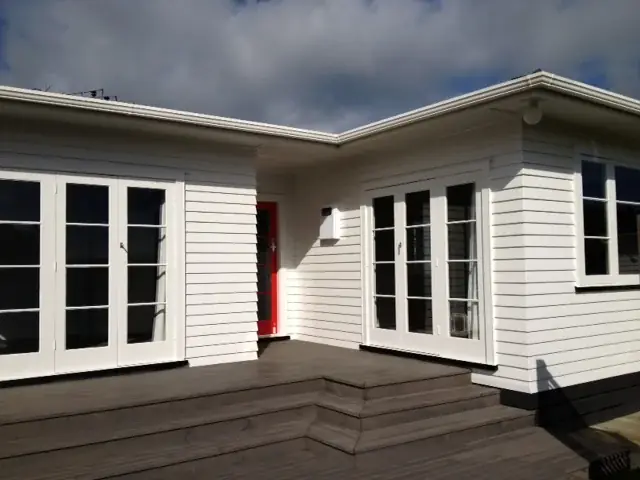
Part of our exterior house painting guide.
Paint or stain your fence?
| Fence paint | Stain | |
|---|---|---|
| Look | Solid colour, hides the grain | Shows the timber grain |
| Rough-sawn palings | Works, takes more paint | Soaks in well |
| Upkeep | Recoat when faded or worn | Recoat more often, but easier to refresh |
| Changing later | Hard to go back to stain | Can be painted over later |
How to paint a fence step by step
- Clear and protect. Trim plants back, lay drop sheets and cover paths. Tell neighbours if their side is affected.
- Clean. Wash off dirt, mould and lichen. A gentle wash suits soft timber better than high-pressure blasting.
- Let it dry. Timber must be dry through before coating, usually a few fine days.
- Repair. Re-fix loose palings, replace rotten ones and punch in nails.
- Prime new or bare timber if your product calls for it. Some fence paints are self-priming.
- Apply two coats, working top to bottom, one section at a time, with the grain.
Brush, roller or sprayer?
A brush works paint into rough-sawn timber and gaps best but is slow. A long-nap roller is faster on flat palings, with a brush to tidy edges. A sprayer is fastest on long fences but needs careful masking and still wind; overspray drifts onto cars, houses and plants. Our spray painting vs roller guide compares the methods.
When to paint a fence
Paint in mild, dry weather with no rain due while the coat dries. Resene describes an ideal painting day as 15 to 20°C with a gentle breeze, and advises against painting in direct hot sun. Read our painting in hot weather and best time to paint guides.
Fence painting as part of an exterior repaint
Fences are often left out of house painting quotes, so ask if you want them done at the same time; a matching fence finishes the job. See our exterior painting cost guide.
Painting a new fence vs repainting an old one
New treated timber often needs time to dry out before it will take paint or stain well; check the timber supplier's guidance. Old fences need cleaning, loose paint removed and bare areas primed. If an old fence has been painted, you cannot easily switch to a stain without stripping it.
How much paint a fence needs
Measure the length and height of each side you are painting, multiply, and allow for two coats. Rough-sawn timber soaks up far more than smooth palings, so allow extra. Our paint quantity guide explains coverage rates.
Spraying a fence: what to know
An airless sprayer covers a long fence fastest, but most of the work is masking: cover plants, paths, cars, the house and the neighbour's side. Spray only in still conditions, keep the gun moving at an even distance, and back-brush rough timber so paint gets into the grain. Many professionals spray then brush in one pass for a durable finish.
Fence paint and stain: what to buy
Fence paints and stains are made for rough, absorbent timber and are usually sold in larger tins, such as 10 litres, because fences use a lot of product. Choose a product made for exterior timber fences, check the coverage on the label against your measurements, and buy enough from one batch to finish so the colour matches.
Your questions
Can you paint a fence with a roller?
Yes. A long-nap roller suits flat palings, with a brush for edges and gaps.
Do I need to prime a fence?
New or bare timber usually needs a primer unless the fence paint is self-priming. Follow the product label.
How long does fence paint last?
It depends on the product, colour and exposure. Recoat when it fades or the timber starts to show.
Should I paint both sides of the fence?
Coating both sides protects the timber evenly. If a neighbour owns the other side, agree it with them first.
Painting your fence with the house?
Tell us about your fence and home and we will include it in a free quote.
Request a free quoteAbout this guide
We are Gary Dyer Painters and Decorators, a trade-qualified Manawatū painting company, Master Painters members and certified Resene Eco-Decorators. We paint homes, decks and exterior timber across Manawatū. This guide was last reviewed in November 2026. Weather guidance follows Resene's ideal painting day advice. Spotted something out of date? Email gary@gdpd.nz.