
Part of our interior painting guide.
Why water based paint peels off oil based paint
Old oil-based enamel cures to a hard, glossy, slightly greasy film. Water based paint has nothing to grip on a smooth, shiny surface, so it may look fine at first and then scratch or peel off in sheets. The fix is mechanical grip (sanding) and chemical grip (the right primer).
How to tell if old paint is oil based
- Clean a small hidden patch.
- Rub it with a cotton bud or rag dampened with methylated spirits.
- If paint comes off on the cloth, it is water based (acrylic). If nothing comes off, it is probably oil based.
Other clues: oil-based enamel is very hard, often yellowed in the shade, and common on doors and trim in homes painted before the move to water based enamels.
How to paint over oil based paint
- Check for lead on homes from the 1980s or earlier before sanding: see our lead paint guide.
- Clean with sugar soap to remove grease and grime, then rinse.
- Sand the whole surface with fine sandpaper until the gloss is dull. You are scuffing, not stripping.
- Dust off with a damp cloth.
- Prime with an adhesion primer or undercoat suited to going over enamel. Our primer vs undercoat guide explains the difference.
- Apply two coats of water based enamel, following the recoat time.
Oil based vs water based paint: the differences
| Water based (acrylic) enamel | Oil based (solventborne) enamel | |
|---|---|---|
| Drying | Faster, recoat the same day | Slower, often overnight |
| Colour over time | Stays white | Yellows, especially out of sunlight |
| Hardness | Tough, slightly softer at first | Very hard, can become brittle |
| Clean-up and odour | Water, low odour | Solvents, strong odour |
| Over the other type | Over oil: needs sanding and primer | Over water based: generally possible on a sound, clean surface |
Most painters now use water based enamels for trim because they stay white and dry quickly. See low VOC paint for indoor air.
Doors, skirting and windows
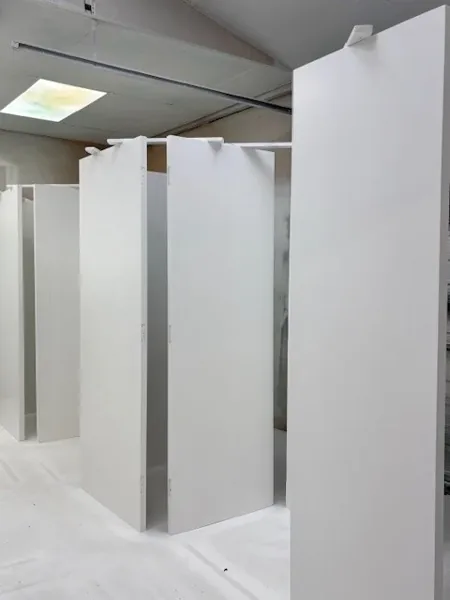
Doors and trim are where most old enamel is found. Our guides to painting skirting boards and painting window frames cover the technique, and doors can be sprayed in our booth: door spray painting.
Common mistakes
- Skipping the sanding because the primer says it bonds well.
- Painting over grease in kitchens and around door handles.
- Recoating before the primer is ready.
- Using wall paint on doors and trim instead of an enamel.
Your questions
Do I have to sand oil based paint before painting?
Yes. Sanding dulls the gloss and gives the primer something to grip.
Can I use undercoat over oil based paint?
Use a primer or undercoat that the maker says is suitable over enamel, after cleaning and sanding.
Can oil based paint go over water based?
Generally yes on a clean, sound surface, but most people now choose water based enamel for trim.
How long should primer dry before painting over enamel?
Follow the primer label. Some primers can be recoated in hours, others need longer in cool weather.
Old enamel doors and trim?
Send photos of your doors and trim. We will prepare them properly and give you a free quote.
Request a free quoteAbout this guide
We are Gary Dyer Painters and Decorators, a trade-qualified Manawatū painting company, Master Painters members and certified Resene Eco-Decorators. We repaint doors, trim and joinery and spray doors in our own booth. This guide was last reviewed in November 2026. If anything here needs correcting, email gary@gdpd.nz.